🤖 AI-Assisted Job Search: The Ultimate Guide
Remote Income Academy teaches practical AI-powered job search strategies that help you build a stronger CV, optimise your LinkedIn profile, prepare for interviews, navigate modern hiring platforms, and stand out in today’s competitive digital job market. Learn how to combine AI tools, automation, and proven career strategies to find better opportunities with confidence.
🤖 Don’t Use AI to Replace Yourself — Use It to Become a Stronger Professional.
🚀 Welcome to the Future of Job Searching:
The job market has changed dramatically in recent years. Employers increasingly expect candidates to demonstrate digital skills, adaptability, and confidence alongside traditional qualifications. At the same time, AI has transformed how people search for jobs, prepare applications, optimise LinkedIn profiles, succeed in interviews, and build rewarding careers.
This pillar brings together Remote Income Academy’s complete AI Job Search learning pathway, helping parents, graduates, students, career changers, and first-time job seekers develop the practical skills needed to navigate today’s digital hiring process with confidence.
🌍 The Future Belongs to People Who Learn to Work Alongside AI—Not Compete Against It.
Whether you’re searching for your first job, changing careers, supporting a graduate, or helping your child prepare for tomorrow’s workplace, you’ll find practical, step-by-step guides that take you from understanding today’s hiring process to building long-term career success.
Introduction:
Most job seekers don’t struggle because they lack talent, intelligence, or potential. They struggle because nobody has shown them how today’s hiring process really works.
Applications disappear into online hiring systems. Recruiters often receive hundreds of applications for a single role. Interviews can feel intimidating, and the competition may seem overwhelming. As a result, many qualified candidates become frustrated and lose confidence long before they reach the right opportunity.
The good news is that modern AI tools can help level the playing field. When combined with the right strategy and genuine effort, AI can help you become a more organised, confident, and competitive job seeker throughout every stage of the hiring process.
AI won’t get you hired, and it won’t replace the effort required to build a successful career. However, when used correctly, AI can help you become a stronger, more prepared, and more competitive candidate than someone who simply copies and pastes AI-generated answers.
In this guide, you’ll learn how to use AI to improve every stage of your job search—from finding opportunities and tailoring applications to preparing for interviews, building long-term career success, and developing skills for today’s rapidly changing world of work.
This guide is ideal for:
- 🎓 School Leavers Ready to Start Their Careers – Learn how to compete confidently, even if you have limited work experience.
- 🎓 Graduates Seeking Their Dream Career – Use AI to strengthen applications, improve interview performance, and stand out in a competitive job market.
- 💼 Career Changers – Discover how AI can help identify transferable skills, improve applications, and confidently transition into a new career.
- 👨👩👧 Parents Investing in Their Child’s Future – Help young job seekers develop practical skills, confidence, and future-ready career habits that improve their chances of long-term success.
Whether you’re applying for your first job, returning to the workforce, changing careers, or looking to accelerate your professional growth, this guide will show you how to use AI responsibly as a practical career assistant—not as a shortcut, but as a genuine competitive advantage.
🤖 Preparing for the Modern Job Market:
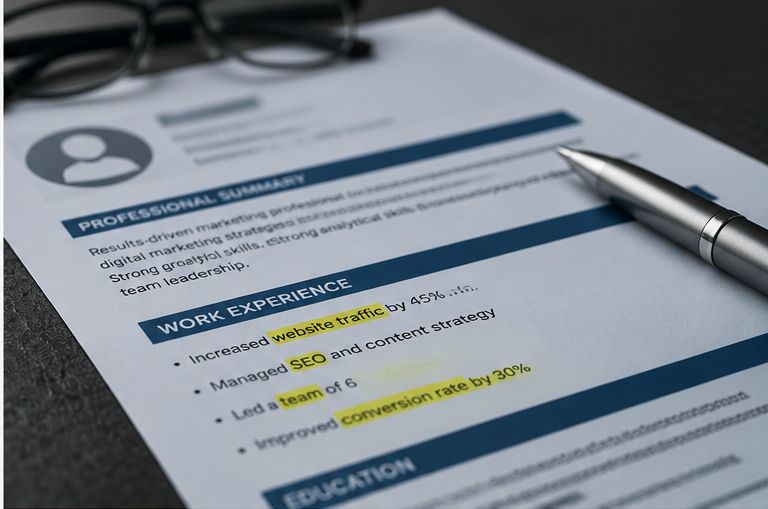
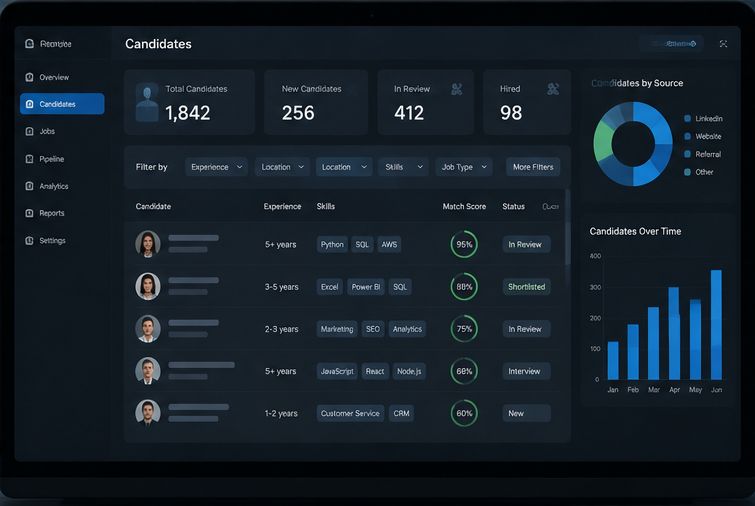
The modern job market looks very different from just a few years ago. Employers no longer rely solely on printed CVs or traditional recruitment methods. Today, applications are submitted online, screened by Applicant Tracking Systems (ATS), reviewed through digital hiring platforms, and often evaluated alongside hundreds of competing candidates.
For many job seekers, this can feel frustrating. You may spend hours preparing an application only to receive no response, or meet every requirement for a role without being invited for an interview. In many cases, this happens because your application must successfully pass several digital screening stages before a recruiter ever sees it.
Understanding how today’s hiring process works is the first step towards becoming a stronger, more competitive candidate.
Modern employers are looking for far more than qualifications alone. They value candidates who communicate professionally, demonstrate digital confidence, solve problems, adapt to change, and show a willingness to learn throughout their careers. These qualities have become increasingly important as AI, automation, remote work, and digital collaboration reshape workplaces across almost every industry.
Rather than viewing artificial intelligence as a threat, successful job seekers are learning how to use it as a competitive advantage. AI can help you research employers, identify skill gaps, improve your CV, optimise your LinkedIn profile, prepare for interviews, organise applications, and build a more structured job search. Used responsibly, AI becomes a powerful assistant that enhances your abilities rather than replacing them.
Before applying for jobs, take time to assess your current position honestly by asking yourself:
- What skills and strengths do I already have?
- Which careers genuinely interest me?
- Which industries are growing and creating new opportunities?
- What experience can I demonstrate through education, volunteering, projects, freelancing, or personal achievements?
- Which skills should I develop to become more competitive?
This self-assessment forms the foundation of a focused and effective job search. Instead of applying for every vacancy you find, you’ll be able to target opportunities that match your strengths while creating a clear plan to improve weaker areas.
Throughout this guide, you’ll learn practical AI-powered job-search strategies, discover the skills employers value most, explore future-ready career advice for parents and young adults, and build the confidence you need to succeed in today’s evolving world of work.
💡 AI-Powered Job Search System
One of the biggest mistakes job seekers make is relying on a random approach to finding opportunities. They browse a few job boards, apply for positions that seem interesting, and hope something works out. While this occasionally leads to success, it often results in inconsistent applications, wasted time, and missed opportunities.
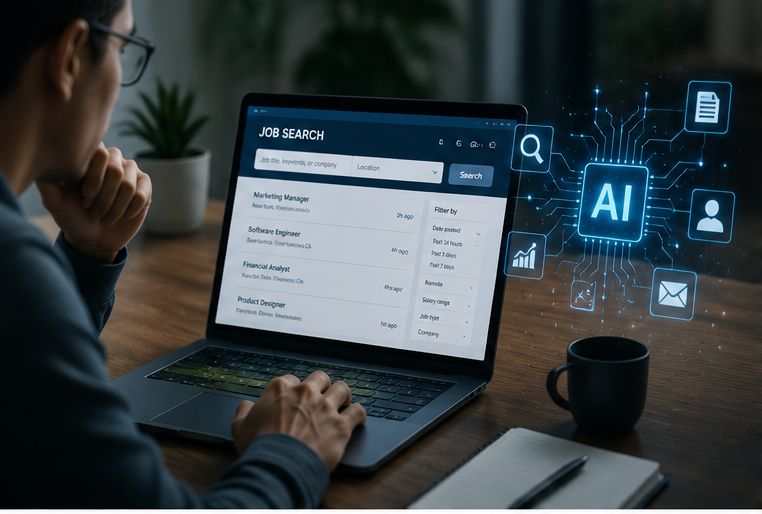
A far more effective approach is to build an AI-powered job search system that helps you identify suitable roles, stay organised, strengthen your applications, and make better decisions throughout the hiring process.
Think of AI as your personal career assistant rather than a replacement for your own judgement. Modern AI tools can help you research employers, analyse job descriptions, identify in-demand skills, improve your CV, optimise your LinkedIn profile, prepare for interviews, and organise your entire job search from one place.
For example, if you’re interested in administrative roles, customer service, marketing, technology, or remote work opportunities, AI can quickly analyse multiple job advertisements and identify recurring keywords, qualifications, software tools, and responsibilities. This gives you valuable insight into what employers consistently look for before you even submit an application.
A practical AI-powered job search workflow could look like this:
- Identify your target role, industry, or career path.
- Collect several current job descriptions.
- Use AI to identify common keywords, required skills, and employer expectations.
- Identify any skills you need to develop.
- Tailor your CV, LinkedIn profile, and cover letter for each application.
- Track your applications using a spreadsheet or digital workspace.
- Use AI to prepare for interviews, follow-up emails, and salary discussions.
This structured approach transforms job searching from a guessing game into a repeatable system that produces better results over time.
AI can also help you discover opportunities you may never have considered. By analysing your existing skills, education, and experience, it can recommend related careers, transferable skills, and emerging job roles that match your strengths. Many candidates limit themselves to a single job title when they may be qualified for several different career paths.
Organisation is another major advantage. Searching for work can quickly become overwhelming when you’re applying through multiple websites and recruitment platforms. AI can help you prioritise applications, create reminders, organise research, track interview invitations, and maintain a consistent workflow throughout your job search.
Remember, however, that AI should support your decision-making—not replace it. Always verify important information, personalise every application, and ensure your CV, cover letter, and interview responses genuinely reflect your own experience, personality, and achievements.
The strongest candidates combine human judgement, authentic communication, and AI assistance. Technology helps you work smarter, but your character, skills, and professionalism remain the qualities employers ultimately hire.
Once you’ve built a reliable AI-powered job search system, the next step is learning how to create applications that capture an employer’s attention and successfully pass today’s digital hiring systems.
⚙️ Creating AI-Powered Job Applications
A strong job application is rarely created by sending the same CV and cover letter to every employer. While this approach may save time, it significantly reduces your chances of success because employers are looking for candidates whose skills, experience, and achievements clearly match the specific role being advertised.
This is where AI becomes one of the most valuable tools in your job search toolkit.
Rather than producing generic applications, AI can help you analyse job descriptions, identify an employer’s priorities, and tailor your CV and cover letter to highlight the experience most relevant to each opportunity.
For example, if a vacancy repeatedly mentions communication skills, customer service, problem-solving, teamwork, or experience with particular software, AI can quickly identify these recurring themes and help you demonstrate how your own background aligns with the employer’s requirements.
AI can assist you by:
- Improving the structure and formatting of your CV.
- Tailoring your CV for specific job opportunities.
- Drafting professional cover letters that you can personalise.
- Identifying important keywords from job descriptions.
- Improving grammar, clarity, readability, and tone.
- Highlighting transferable skills and relevant achievements.
- Creating application checklists to help you avoid common mistakes.
One of the most effective ways to use AI is to compare your existing CV with a job description. AI can quickly identify missing skills, qualifications, and keywords, allowing you to strengthen your application while remaining honest and accurate.
However, there is an important difference between using AI to improve your application and allowing AI to write your entire application for you.
Recruiters are becoming increasingly familiar with generic AI-generated content. Applications that sound robotic, overly formal, or disconnected from a candidate’s genuine experience often fail to make a positive impression. Employers want authentic people—not perfectly polished blocks of machine-generated text.
The best approach is to use AI as an editor, coach, and writing assistant. Let it help you organise your ideas, improve your writing, and identify opportunities to strengthen your application. Then review everything carefully to ensure the final result reflects your own experience, personality, and career goals.
Remember that your CV and cover letter are marketing documents. Their purpose is not to tell your entire life story but to demonstrate why you are the right candidate for a specific opportunity. AI helps you communicate that message more clearly—it doesn’t replace your unique story.
By combining authentic experience with responsible AI assistance, you can create professional applications that are both compelling and trustworthy—qualities employers consistently value.
The next step is making sure those applications successfully pass through Applicant Tracking Systems (ATS), the digital gatekeepers that often decide whether your application reaches a hiring manager.
💡 The strongest candidates don’t just use AI to write documents—they use it to think better, solve problems faster, and make smarter career decisions. AI Thinking OS™ shows you how to work alongside AI as a practical assistant, helping you improve your job search, boost productivity, and develop skills you’ll use throughout your career.
🔍 How to Beat ATS Systems Using AI
What Is an Applicant Tracking System (ATS)?
An Applicant Tracking System (ATS) is software that employers use to organise, sort, and manage job applications. Many organisations receive hundreds—sometimes thousands—of applications for a single vacancy, making it impossible for recruiters to review every CV manually.
An ATS helps employers streamline this process by collecting applications, storing candidate information, and making it easier for recruiters to identify applicants whose qualifications appear to match the requirements of a role.
Although ATS software is often portrayed as a mysterious system that automatically rejects candidates, the reality is much simpler. Most ATS platforms are designed to organise large volumes of applications efficiently—not unfairly eliminate qualified applicants.
Why Some Applications Never Reach the Interview Stage
Many applications fail not because candidates lack the necessary skills, but because important information is unclear, missing, or poorly presented. If recruiters or ATS software cannot quickly identify your relevant experience, your application is less likely to progress.
Common mistakes include:
- Using overly complex CV layouts that are difficult for ATS software to read.
- Failing to include relevant skills and terminology from the job description.
- Submitting the same generic CV for every application.
- Using vague or unclear job titles and descriptions.
- Including unnecessary information that distracts from your key strengths.
- Not tailoring your application to the specific role.
How AI Can Help Optimise Your CV
AI can be an excellent assistant when preparing ATS-friendly applications. By analysing a job description, AI can identify the skills, qualifications, software, and keywords that employers repeatedly mention.
You can then compare those requirements with your own CV to make sure your genuine experience is presented clearly and effectively.
For example, if several job advertisements emphasise customer service, project management, communication, data analysis, teamwork, or experience with specific software, AI can help you identify opportunities to highlight those strengths naturally within your application.
The objective is never to “stuff” your CV with keywords. Instead, the goal is to ensure your real skills and experience are described using clear, relevant language that both recruiters and ATS software can understand.
Remember—People Still Make Hiring Decisions
One of the biggest misconceptions about ATS software is that it makes hiring decisions on its own. In reality, recruiters still evaluate applications, conduct interviews, and decide who receives a job offer.
Your CV should therefore appeal to both technology and people. It needs to be easy for ATS software to process while remaining professional, engaging, and authentic for the hiring manager who eventually reads it.
The strongest applications combine genuine experience, relevant skills, clear communication, and responsible use of AI. Technology can help you present your strengths more effectively—but it cannot replace honesty, preparation, and professionalism.
Once your application reaches a recruiter, the next step is preparing for the interview. Fortunately, AI can help you practise, build confidence, and improve your interview performance too.
🛠️ AI-Powered Interview Preparation
Why Interview Preparation Matters.
For many job seekers, the interview is the most intimidating part of the hiring process. Even highly qualified candidates can struggle if they feel nervous, unprepared, or unsure of what to expect.
The good news is that interviewing is a skill that improves with practice. Confidence rarely appears by accident—it is built through preparation, repetition, and learning how to communicate your value effectively. This is where AI can become one of your most useful career tools.
Use AI as Your Personal Interview Coach.
One of the most practical ways to use AI during your job search is to simulate realistic interview scenarios before the real interview takes place. Instead of trying to guess what an employer might ask, you can use AI to generate interview questions based on the specific role you’re applying for.
Whether you’re interviewing for customer service, administration, marketing, sales, project management, remote work, or graduate positions, AI can help you practise answering realistic questions while identifying areas that need improvement.
AI can also help you:
- Research the employer and industry.
- Understand common interview questions.
- Develop stronger examples from your own experience.
- Improve the clarity and structure of your answers.
- Practise behavioural interview questions.
- Prepare thoughtful questions to ask the interviewer.
- Identify strengths and weaknesses in your responses.
Use the STAR Method to Structure Strong Answers.
Many employers use behavioural interview questions to understand how you’ve handled situations in the past. These questions often begin with phrases such as:
- “Tell me about a time when…”
- “Describe a situation where…”
- “Give an example of…”
A simple framework for answering these questions is the STAR Method:
- Situation – Describe the context.
- Task – Explain your responsibility.
- Action – Describe what you did.
- Result – Explain the outcome.
AI can help you organise your experiences into this structure while ensuring your answers remain relevant, logical, and easy for interviewers to follow.
Don’t Memorise AI-Generated Answers.
One of the biggest mistakes candidates make is asking AI to write “perfect” interview answers and then memorising them word for word. Recruiters want genuine conversations, not rehearsed scripts.
Instead, use AI to organise your thoughts, identify key talking points, and practise delivering your answers naturally. The final response should always reflect your own experience, personality, and communication style.
Confidence Comes From Preparation.
The purpose of interview preparation isn’t to eliminate nervousness—it’s to reduce uncertainty. Even experienced professionals feel nervous before important interviews.
The more familiar you become with the company, the role, and your own achievements, the easier it becomes to communicate with confidence.
Used responsibly, AI can help you prepare more effectively, practise more efficiently, and walk into interviews feeling organised, confident, and ready to succeed. Landing the job is an exciting milestone—but it’s only the beginning of building a successful, future-ready career.
Want to go further? Read our complete guide, How to Handle AI Video Interviews (What Employers Evaluate), to learn how recruiters assess candidates during recorded and live online interviews.

🎯 Career Success After Getting Hired
Your Career Doesn’t End When You Get the Job.
Getting hired is a major milestone, but it isn’t the finish line. It’s the beginning of your professional journey. The habits you build, the skills you continue developing, and your willingness to adapt will often have a far greater impact on your long-term success than the interview that got you hired.
Today’s employers value people who continue learning, embrace change, solve problems independently, communicate professionally, and make good use of technology. In an AI-powered workplace, those qualities are becoming just as important as technical qualifications.
The same AI tools that helped you find a job can now help you become a more valuable employee.
Using AI to Improve Workplace Performance.
Modern AI tools can help employees work smarter by reducing repetitive tasks and improving productivity without replacing human judgement.
AI can assist you with:
- Summarising lengthy reports and documents.
- Drafting professional emails and workplace communication.
- Organising projects, meetings and task lists.
- Creating presentations and meeting notes.
- Researching solutions to workplace challenges.
- Learning new software and digital tools faster.
- Managing your workload more efficiently.
Remember that AI works best as your assistant—not your replacement. Employers still value critical thinking, initiative, and sound decision-making.
Never Stop Learning.
The workplace continues to evolve as new technologies emerge. Employees who remain curious and continue learning are often the ones who earn promotions, take on leadership roles, and discover new career opportunities.
AI can become your personal learning partner by explaining unfamiliar concepts, helping you understand new software, creating study plans, and accelerating professional development whenever you need it.
Build Skills That Stay Valuable.
Some skills remain valuable regardless of your job title or industry. These transferable skills make you more employable throughout your career.
Continue strengthening your:
- Communication skills.
- Problem-solving ability.
- Critical thinking.
- Digital literacy.
- AI literacy.
- Adaptability.
- Professional confidence.
These are the qualities employers consistently look for when considering promotions and future opportunities.
Think Bigger Than Your Current Job.
Your first job is only one chapter of your career. In the years ahead you may move into leadership, specialise in a particular field, work remotely, become a freelancer, build additional income streams, or even start your own business.
The skills you develop today create opportunities tomorrow. By learning to work effectively alongside AI, you’re building long-term career resilience in a workplace that will continue evolving for years to come.
Before we finish this guide, let’s answer some of the most common questions people ask about AI-assisted job searching and building a successful career.

👨👩👧 Helping Parents Prepare Young Adults for the Future of Work:
Preparing for the future of work starts long before submitting a first job application.
NOTES: This growing collection of practical guides helps parents, graduates, teenagers, and first-time job seekers build confidence, develop future-ready skills, and navigate today’s AI-powered workplace. Together, these articles form a complete roadmap for long-term career success.
- How to Help Your Child Find Their First Job in the AI Era
- Remote Skills Every Teenager Should Learn Before Leaving School
- Helping Young Adults Build a Professional Digital Presence
- What Employers Really Look for in Young Job Seekers
- How Parents Can Help Graduates Build Confidence After University
- Should Your Child Learn AI or Coding First? A Parent’s Guide to Future Careers
- How to Prepare Teenagers for Remote Work: A Parent’s Guide
- Career Mistakes Parents Should Avoid When Supporting Young Adults
- Creating a Future-Ready Career Plan Together (A Practical Guide for Parents & Young Adults)

🤖 Responsible AI Use: Your Competitive Advantage
AI Is a Powerful Assistant—Not a Replacement.
Artificial intelligence is transforming almost every industry, but the most successful professionals don’t use AI to replace their thinking—they use it to enhance it.
Whether you’re searching for a job, preparing for interviews, communicating with colleagues, or solving workplace problems, AI should help you become more productive, organised, and informed while you remain responsible for the final decisions.
Employers increasingly value candidates who know how to use AI responsibly, ethically, and professionally.
Use AI to Support Your Work—Not Do Your Work.
AI works best when it helps you:
- Brainstorm ideas.
- Research unfamiliar topics.
- Improve your writing.
- Organise information.
- Plan projects.
- Solve problems more efficiently.
- Learn new skills faster.
Always review, verify, and personalise anything AI produces. Your experience, judgement, and professional integrity are what make your work valuable.
Common Mistakes to Avoid.
Responsible AI users avoid shortcuts that could damage their credibility. Never:
- Invent qualifications or work experience.
- Copy AI-generated content without reviewing it.
- Submit generic applications written entirely by AI.
- Share confidential employer or client information.
- Assume AI is always correct.
- Allow AI to replace your own critical thinking.
Remember that AI can occasionally make mistakes or generate inaccurate information. The responsibility for the final result always belongs to you.
The Human Advantage Still Matters.
As AI becomes more common in the workplace, the skills that make people valuable become even more important. Communication, creativity, empathy, problem-solving, adaptability, and sound judgement remain qualities that technology cannot replace.
The strongest professionals combine these human strengths with AI to produce better work, make smarter decisions, and continue learning throughout their careers.
AI Literacy Is Becoming a Career Skill.
Just as digital literacy became an essential workplace skill over the past two decades, AI literacy is rapidly becoming part of modern employability. Learning how to work alongside AI responsibly will help you stay competitive as technology continues to evolve.
The future doesn’t belong to people who fear AI—or to those who rely on it completely. It belongs to people who know how to combine human judgement with intelligent technology.
💡 Want to Learn How to Think With AI Instead of Simply Using It?
AI Thinking OS™ teaches practical prompting, structured thinking, workflow design, decision-making, and responsible AI use so you can apply AI confidently across your career, job search, business, and everyday life.
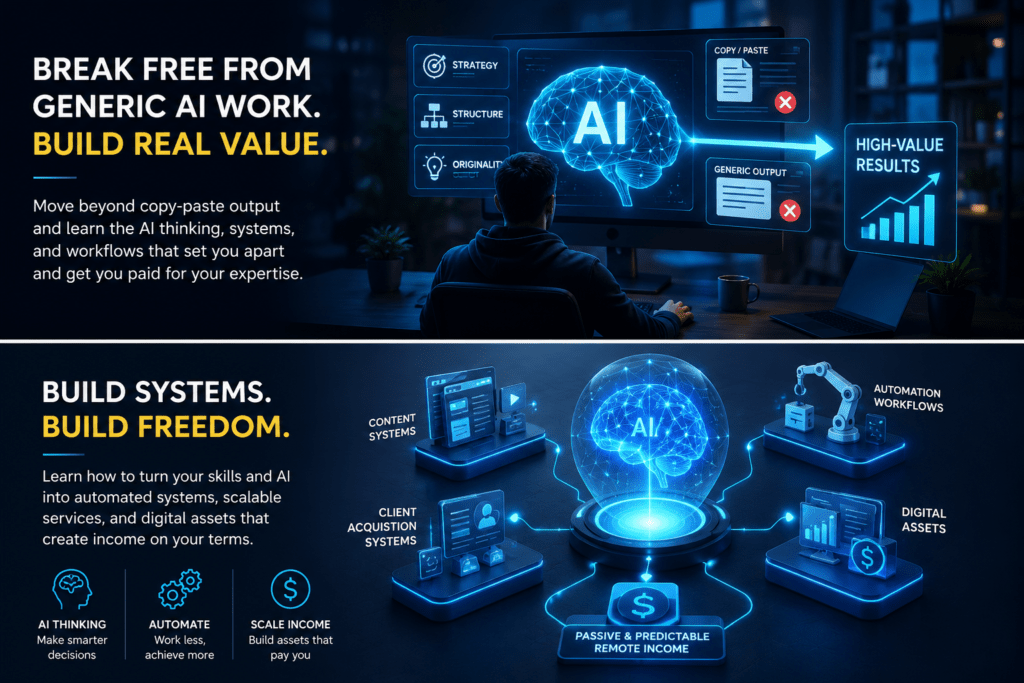
Learn how to use AI tools and Workflows the Smart way with RIA Training. (Opens in a new window
📣 Beginner Questions About AI Job Searching & Career Development
Do I need to be technical to use AI for job searching?
No. Most modern AI tools are designed to be simple and conversational. If you can describe your situation or ask a question, you can use AI to improve your job search, prepare applications, research employers, and practise interviews.
Will AI help me get hired?
AI cannot guarantee you a job, but it can help you become a stronger candidate. Used correctly, AI can improve your CV, tailor applications, prepare you for interviews, organise your job search, and identify opportunities that match your skills.
Is it acceptable to use AI when applying for jobs?
Yes. Many employers expect candidates to use modern digital tools. The important thing is to use AI responsibly. Your CV, cover letter, and interview answers should always reflect your real skills, experience, and achievements.
Will AI replace jobs?
Some jobs will change as AI becomes more common, but many new opportunities are also emerging. Employers are increasingly looking for people who know how to work alongside AI rather than compete against it. Developing AI literacy is becoming an important employability skill.
Should young people learn AI or coding first?
That depends on their interests and career goals. AI literacy helps almost everyone become more productive, while coding is valuable for those pursuing technical careers. Over time, learning both provides an excellent foundation for the future workplace.
How can parents help young adults prepare for today’s job market?
Parents don’t need to become technology experts. The biggest difference they can make is encouraging confidence, continuous learning, curiosity, resilience, responsible AI use, and good digital habits. These qualities prepare young people for long-term career success.
Can AI replace experience?
No. AI cannot replace real-world experience, but it can help you present your existing experience more effectively. It can also help identify transferable skills, improve communication, and highlight strengths that employers value.
What skills do employers value most today?
Alongside qualifications, employers increasingly look for communication, problem-solving, adaptability, teamwork, digital literacy, AI literacy, professionalism, and a willingness to keep learning throughout your career.
What is the biggest mistake job seekers make?
Many candidates rely on generic CVs and submit the same application to every employer. A structured job search that uses AI to research roles, tailor applications, and prepare thoroughly for interviews usually produces far better results.
Where should I go after reading this guide?
This pillar is your foundation. Continue exploring the linked guides throughout this hub, then apply everything you’ve learned using the AI Job Search System. By combining practical AI skills with continuous learning and consistent action, you’ll be well prepared for today’s—and tomorrow’s—job market.

🧠 The AI Career & Job Search Roadmap at a Glance
By now you’ve seen how AI can support every stage of career development—from preparing for the modern workplace to landing your first job and continuing to grow professionally.
The real power isn’t found in any single AI tool. It comes from following a structured system that combines practical skills, responsible AI use, continuous learning, and consistent action.
Your Complete Career Success Roadmap.
Think of the journey like this:
- Step 1: Understand Today’s Job Market — Learn how AI, remote work, and digital hiring have transformed employment.
- Step 2: Build Future-Ready Skills — Develop digital literacy, communication, problem-solving, AI literacy, adaptability, and professional confidence.
- Step 3: Create a Structured Job Search System — Use AI to research employers, analyse vacancies, organise applications, and identify the best opportunities.
- Step 4: Create Strong Applications — Tailor your CV and cover letter for every role while keeping your applications authentic and professional.
- Step 5: Optimise for ATS Systems — Present your experience clearly so both hiring software and recruiters can easily understand your strengths.
- Step 6: Prepare for Interviews — Practise with AI, research employers, improve your communication, and build genuine confidence.
- Step 7: Use AI Responsibly — Combine technology with honesty, critical thinking, ethics, and sound judgement throughout your career.
- Step 8: Grow After Getting Hired — Continue learning, improve your productivity, develop new skills, and build long-term career resilience.
Why This System Works.
Many job seekers jump randomly between job boards, applications, and interviews without a clear strategy. This often leads to frustration, inconsistent applications, and missed opportunities.
A structured career system replaces guesswork with direction. Instead of relying on luck, you build valuable skills, improve your applications, prepare more effectively, and become a stronger candidate over time.
The Biggest Mindset Shift.
The most successful job seekers stop asking:
“How do I get any job?”
Instead, they begin asking:
“How do I become the kind of professional employers want to hire?”
That simple shift changes everything. It encourages continuous learning, smarter preparation, responsible AI use, and long-term career growth rather than chasing individual vacancies.
The future belongs to people who continue learning, embrace technology responsibly, and adapt as the workplace evolves. The knowledge you’ve gained throughout this hub provides a practical roadmap for building exactly that kind of career.
Let’s finish by bringing everything together and looking at your next steps.
🚀 Ready to Put This Career System into Action?
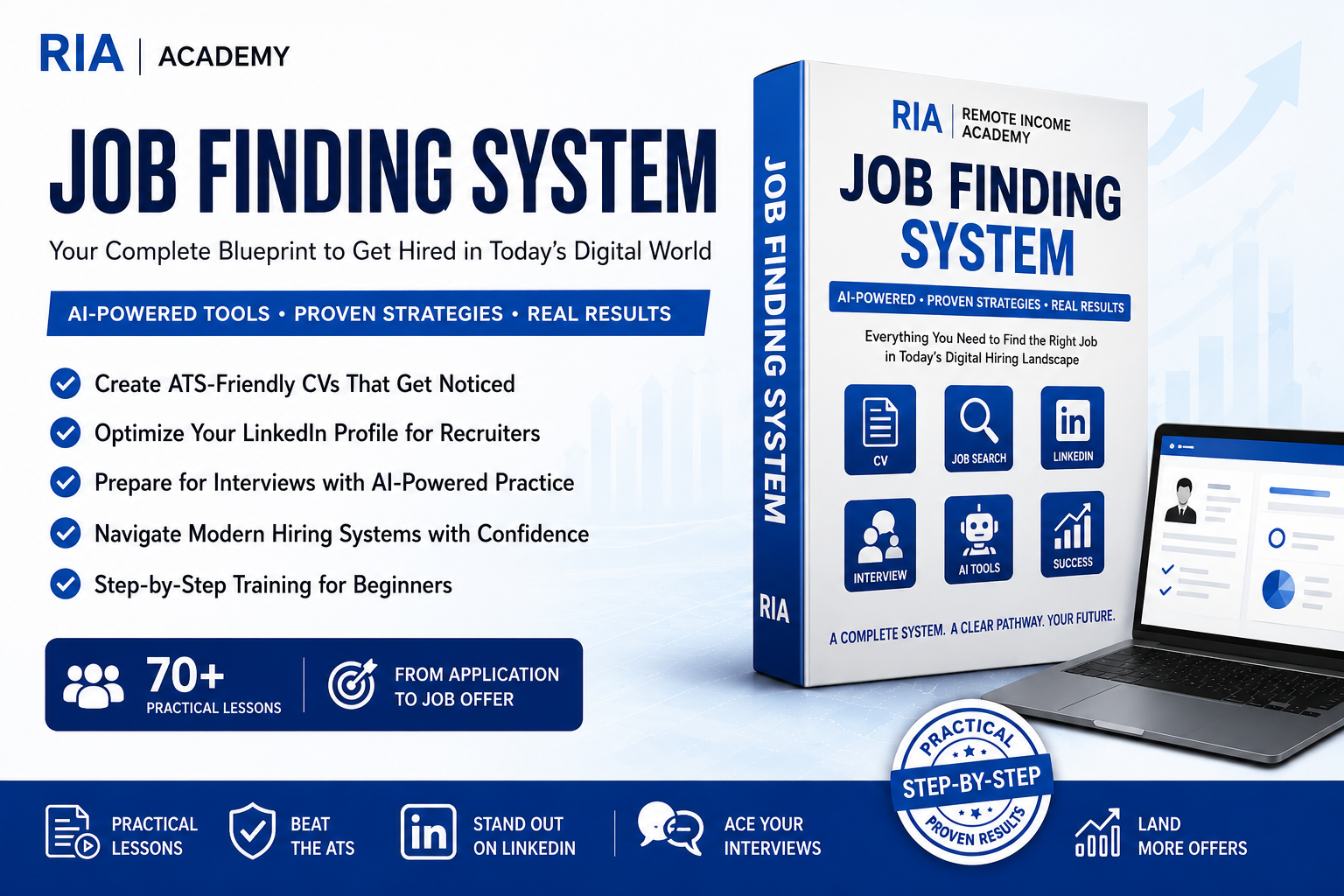
The AI Job Search System walks you step-by-step through using AI responsibly to build stronger CVs, tailor job applications, optimise your LinkedIn profile, prepare for interviews, organise your job search, and confidently compete in today’s AI-powered job market.
Stop guessing. Start following a proven system that helps you become a stronger, more confident, and future-ready candidate.
🏁 In Conclusion & Next Steps
Finding a job today is no longer just about submitting applications and hoping for the best. The hiring process has become more digital, more competitive, and increasingly shaped by AI, online recruitment platforms, and changing employer expectations.
That doesn’t mean success is out of reach—it simply means the rules have evolved. The candidates who succeed are the ones who continue learning, adapt to change, communicate professionally, and use modern technology responsibly.
Throughout this guide, you’ve learned how AI can help you research employers, build stronger applications, optimise your CV, prepare for interviews, understand Applicant Tracking Systems (ATS), and continue growing long after you’ve been hired. You’ve also seen why digital literacy, employability skills, continuous learning, and responsible AI use are becoming essential for long-term career success.
The most important lesson is this:
AI is not a shortcut to replace your effort—it is a practical assistant that helps you think more clearly, prepare more strategically, and build a stronger, more future-ready career.
The future belongs to people who combine human qualities like curiosity, communication, creativity, integrity, and critical thinking with the intelligent use of AI. Those are the professionals employers will continue to value as technology evolves.
Whether you’re a student, graduate, career changer, parent supporting a young adult, or someone returning to the workforce, you now have a roadmap for navigating today’s job market with greater confidence.
Now it’s time to stop preparing and start applying what you’ve learned. Every application, every interview, every new skill, and every step forward builds momentum toward the career you want.
Your future career starts with the actions you take today.
🔗 Further AI Career & Job Search Guides
Your journey doesn’t end with a single article. Explore these practical guides to strengthen every stage of your AI-powered career—from preparing for the future workplace and creating stronger applications to mastering interviews, building employability skills, and achieving long-term career success.
🤖 AI Job Search & Career Development
- How to Use AI to Get a Job
- How to Use AI to Write Your CV
- How to Beat ATS Systems Using AI
- How to Prepare for a Job Interview with ChatGPT
- How to Handle AI Video Interviews
- How to Use ChatGPT to Analyse Job Descriptions
- 7 AI Prompts to Uncover Hidden Jobs on LinkedIn
- How to Train ChatGPT on Your Writing Style
👨👩👧 Parents, Graduates & Future Careers
- How to Help Your Child Find Their First Job in the AI Era
- Helping Young Adults Build a Professional Digital Presence
- Remote Skills Every Teenager Should Learn Before Leaving School
- What Employers Really Look for in Young Job Seekers
- How Parents Can Help Graduates Build Confidence After University
- Should Your Child Learn AI or Coding First?
- How to Prepare Teenagers for Remote Work
- Career Mistakes Parents Should Avoid When Supporting Young Adults
- Creating a Future-Ready Career Plan Together
Each guide builds on the same philosophy: combine practical skills, responsible AI use, continuous learning, and structured career planning to become a stronger, more confident, and future-ready professional.
🚀 Ready to Turn AI Into Your Career Advantage?