10 AI Gigs You Can Start Without Technical Skills: Exploring AI Side Hustles for Beginners.

📌 In This Guide You’ll Learn:
✅ 10 practical AI side hustles for beginners that don’t require programming skills.
✅ What each gig actually involves and who it may suit.
✅ How AI can help you complete the work without replacing human judgment.
✅ Which opportunities are better for beginners and which require more practice.
✅ How to test one AI gig in the next 24 hours without building an entire business first.
⏱ Reading Time: 8–10 Minutes
You Don’t Need to Be a Programmer to Start Working With AI:
When people hear the words AI jobs or AI income, they often imagine programmers, engineers, machine-learning specialists, or people building complicated software. One of the most common search terms is looking for AI side hustles for beginners because that gives you a suitably simpler option to choose from rather than making the whole subject seem inaccessible and complicated.
But there is another side to the AI economy that is much more approachable. Businesses still need people to write, edit, research, organise, communicate, create content, prepare documents, manage information, and solve everyday problems. AI can make many of those tasks faster, but someone still needs to understand the client’s requirements, check the output, make decisions, and deliver something useful.
That’s where AI-assisted gigs come in.
You don’t necessarily need technical AI qualifications to begin. In many cases, you need a useful existing skill, a willingness to learn how AI tools work, and the ability to turn those tools into a practical result for another person or business. That is how you get started with AI side hustles for beginners…
The important distinction is this: You are not selling AI. You’re using AI to deliver something people already need.

That mindset changes everything.
So, What Counts as an AI Gig?
An AI gig is a small, clearly defined service or piece of work where AI helps you complete the task more efficiently.
For example, a business may need these services:
- Social media content.
- Research assistance.
- Website or blog editing.
- Administrative support.
- Presentation preparation.
- Short-form video content.
- Lead research.
- Document formatting.
- Basic visual content.
- Data-related tasks.
Learning how to start AI side hustles for beginners doesn’t mean you have to become an AI expert before you can experiment with these opportunities. You do, however, need to understand what the client wants and take responsibility for the finished result.
AI can generate a draft but you are responsible for deciding whether that draft is any good.
That human-in-the-loop approach is central to how we think about AI-assisted work at Remote Income Academy.
10 AI side hustles for beginners You Can Start Without Technical Skills:
1. AI Content Assistant:
Businesses need content constantly, but producing it can take time. An AI content assistant can help with tasks such as:
- Blog research.
- First drafts.
- Social media captions.
- Content ideas.
- Content calendars.
- Email drafts.
- Headline variations.
- Editing and restructuring.
You don’t need to present yourself as an expert writer if you’re starting. A better beginner approach is to offer a narrow service.
For example: “I help small businesses turn their existing ideas into clear social media content using an AI-assisted workflow.” AI can help with brainstorming and drafting, but you still need to check facts, improve the writing, understand the audience, and make the final content sound appropriate for the business. Read Client Outreach for Freelancers
Beginner tip:
Don’t offer “AI content.” Rather, offer a specific result. A business owner understands “10 social media posts for your local business” much more easily than “AI-powered content solutions.”
2. AI Data Annotation and Data-Related Tasks:
AI systems need data, and some AI-related work involves reviewing, categorising, labelling, or evaluating information. Depending on the project, tasks can involve:
- Classifying text.
- Reviewing images.
- Checking search results.
- Categorising information.
- Evaluating AI-generated responses.
- Following detailed labelling instructions
Some projects are beginner-friendly, while others may require specific knowledge or qualifications. Some of these tasks pay very little too, but it is still a great starting point for your first wins..(Income)
This is therefore an opportunity to research carefully rather than assume every listing is suitable. The biggest advantage for beginners is that some data-related work focuses more on accuracy, attention to detail, and following instructions than on programming.
The downside? It can be repetitive, and availability of legitimate projects can vary.
Best suited to: Someone who is patient, detail-oriented, comfortable following instructions, and willing to work carefully rather than rush.

3. AI Virtual Assistant:
Virtual assistance has existed for years. AI simply gives a capable virtual assistant another set of tools. An AI-assisted virtual assistant might help with:
- Research.
- Email drafting.
- Meeting notes.
- Document organisation.
- Spreadsheet preparation.
- Task lists.
- Calendar-related administration.
- Basic customer communication.
- Creating standard operating procedures.
The important point is that AI doesn’t make you a virtual assistant.
Your organisational ability does. AI can help reduce repetitive work, but clients still need somebody who understands priorities, communicates clearly, checks information, and gets tasks completed. A beginner could start with one small service rather than offering to become someone’s entire virtual office.
For example: “I help small businesses organise research and administrative information into clear, usable documents.”
That’s a much easier offer to understand.
4. AI Social Media Assistant. (Popular Service):
Social media is another area where AI can assist without requiring technical expertise.
You could help a small business develop:
- Post ideas.
- Captions.
- Content calendars.
- Short promotional copy.
- Hashtag ideas.
- Content variations.
- Basic audience research.
- Repurposed content.
The mistake would be assuming AI can simply generate everything, and you can send it directly to the client. Good social media content still requires context. A restaurant, accountant, plumber, coach, and online retailer don’t communicate in the same way. Your value comes from understanding the business and turning AI-generated possibilities into content that actually fits.
Simple Starting Point AI Side Hustles for Beginners Services Might Be:
“Create a seven-day social media starter pack for a small business.”
That’s a solid offer, and you can ask your AI to refine that for an outreach message.
5. AI Research Assistant:
Research is an excellent example of where AI can speed up work without eliminating the need for human judgment.
A research assistant might help with:
- Competitor research.
- Topic research.
- Market research.
- Product comparisons.
- Customer questions.
- Industry summaries.
- Collecting information from specified sources.
- Organising research into a usable document
There is an important warning here. Never treat an AI-generated answer as automatically accurate simply because it sounds confident.
Research work requires verification. If a client pays you for information, your job isn’t merely to ask an AI model a question and copy the response. Your job is to investigate, organise, check, and present useful information. That difference can turn a basic AI task into a professional service.

6. AI Video Repurposing Assistant:
Video has become an important source of content for businesses and creators, but many people don’t have the time to turn one long piece of content into multiple smaller pieces.
An AI-assisted video workflow can help with tasks such as:
- Identifying useful sections of a longer video.
- Creating short-form content ideas.
- Producing captions.
- Drafting descriptions.
- Creating titles.
- Turning spoken content into written posts.
- Repurposing one idea across several platforms.
You don’t necessarily need to become a professional filmmaker. Instead, you can specialise in repurposing existing content.
For example: One long video → several short clips → captions → social posts → email content.
The client already has the raw material, and your job is to help them get more value from it.
7. AI Presentation and Document Assistant:
Many businesses regularly create presentations, reports, proposals, guides, checklists, and internal documents.
AI can help with:
- Outlining presentations.
- Structuring documents.
- Rewriting confusing material.
- Summarising information.
- Creating checklists.
- Turning notes into organised documents.
- Preparing presentation text.
- Simplifying complex information.
This is especially useful if you’re naturally good at taking messy information and making it easier to understand. And that is an important lesson: Your existing human skill may be more valuable than your AI skill.
If you’re organised, a good communicator, a researcher, an editor, or someone who understands visual presentation, AI can amplify that ability. You don’t have to become a completely different person to participate in the AI economy.
8. AI Lead Research and Outreach Assistant:
Businesses need potential customers. Finding and organising potential leads can take considerable time. An AI-assisted workflow can help with tasks such as:
- Researching potential businesses.
- Organising prospect information.
- Creating research summaries.
- Identifying possible customer problems.
- Drafting personalised outreach.
- Organising follow-up information.
But there is a major difference between personalised outreach and mass-produced spam.
If you use AI to send hundreds of generic messages, you’re unlikely to build a valuable service. A better approach is to use AI to help you research a smaller number of relevant prospects and prepare more thoughtful outreach. Your job is to add the human judgment.
AI can help you prepare. It shouldn’t replace thinking.
9. AI-Assisted Visual Content:
You don’t need to become a professional graphic designer to help a small business create basic visual content. Depending on your ability and the client’s requirements, you could assist with:
- Social media graphics.
- Simple promotional images.
- Presentation visuals.
- Blog graphics.
- Thumbnail concepts.
- Basic marketing materials.
- Image ideas and variations.
AI image tools can dramatically speed up experimentation, but the tool itself isn’t the service. The client doesn’t really care which button you pressed. They care whether the finished visual is appropriate for their business.
That means you still need to understand:
- Basic composition.
- Readability.
- Branding.
- Audience.
- Copyright and usage considerations.
- Consistency.
AI gives you possibilities. You still have to choose the right one.

10. AI Workflow and Micro-Service Assistant:
This is where several of the previous ideas can eventually become something more valuable. Instead of selling individual tasks, you can eventually package a simple repeatable workflow.
For example: “I turn one weekly business update into a short email, three social posts, and a customer-facing summary.”
AI might help with the research, drafting, formatting, and repurposing, but the client is not buying the AI. They’re buying the finished workflow and the result.
This is the beginning of thinking beyond individual tasks and toward repeatable micro-services. You don’t have to start there. In fact, beginners are usually better off proving that they can deliver one simple service first.
But once you understand the workflow, you can begin looking for ways to make the service more valuable and repeatable.
Choosing Suitable AI Side Hustles for Beginners:
Don’t choose an AI gig simply because it sounds exciting. Start with the skills you already possess.
Ask yourself these questions:
Are you a good writer?
Look at content assistance, editing, social media, or research.
Are you organised?
Consider virtual assistance, document preparation, or workflow support.
Are you good at finding information?
Research and lead research may suit you.
Are you visually creative?
Explore basic visual content or presentation assistance.
Are you comfortable working with video?
Consider content repurposing.
Are you extremely detail-oriented?
Data-related tasks may be worth investigating.
This is an important mindset shift: Don’t ask, “Which AI tool should I learn?”
Ask: “What useful problem can I solve with the skills I already have, using AI to make the process better?”
That’s a much more practical starting point.
How AI Should Actually Fit Into Your Work?
AI can help you: Think → Research → Draft → Organise → Refine → Repurpose
But you should still: Decide → Verify → Edit → Personalise → Approve → Deliver
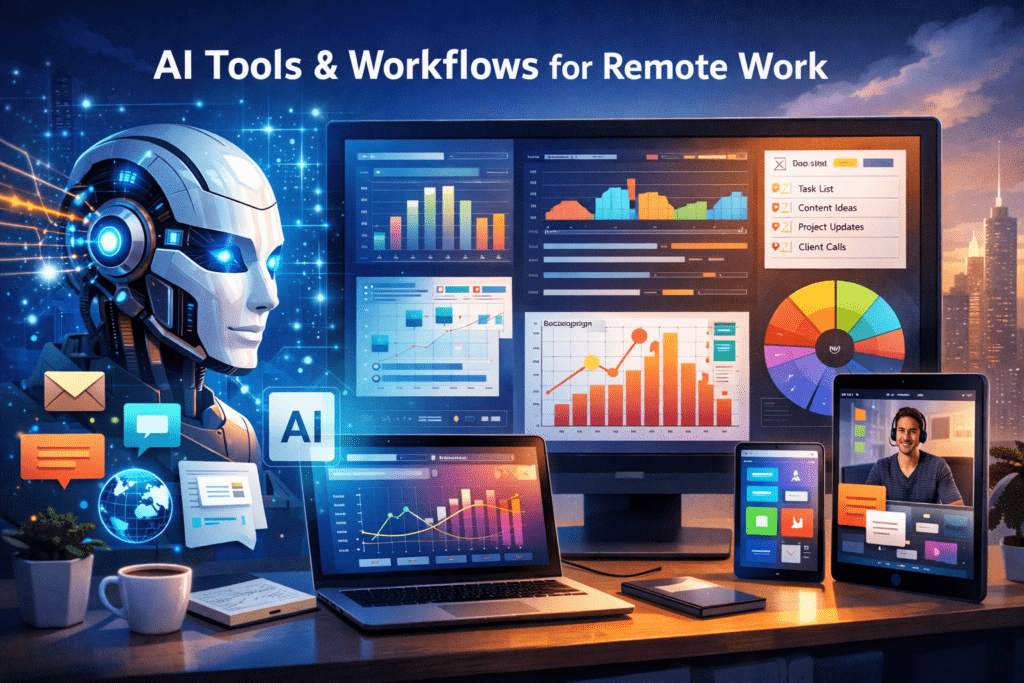
That distinction matters. Here’s a simple workflow you can use for almost any AI-assisted gig:
Step 1 — Understand the task.
What does the client actually need?
Step 2 — Break it into smaller tasks.
Don’t throw the entire problem at AI in one giant prompt.
Step 3 — Use AI for the parts it handles well.
Brainstorming, drafting, organising, summarising, and generating alternatives can all be useful.
Step 4 — Check the output
Look for errors, missing context, weak reasoning, inaccurate information, and inappropriate wording.
Step 5 — Add your judgment
This is where your human skill becomes valuable.
Step 6 — Deliver the finished result
The client shouldn’t have to finish your work for you.
A Simple AI Prompt to Help You Find Your Best Gig
If you’re unsure where to begin, try this: ( Refine as needed)
Prompt: “I want to start a beginner-friendly AI-assisted side hustle using skills I already have. My current skills are: [list your skills]. My available time is: [hours per week]. I do not have technical or programming skills. Give me five realistic service ideas I could test. For each one, explain the customer problem it solves, what the finished deliverable would be, what parts AI could assist with, what I would need to do myself, and what I should learn before offering it to clients. Do not assume I am an expert.”
Then don’t blindly accept the answer. Challenge it.
Ask: “Which of these ideas is most realistic for a complete beginner, and what could make it difficult to sell?”
That second question is often more useful than the first.
What Beginners Should NOT Do!
The biggest mistake is trying to start ten AI gigs at once. Don’t spend three weeks learning:
- Five AI chatbots.
- Four image generators.
- Three automation platforms.
- Video editing.
- Coding.
- Prompt engineering.
- Digital marketing.
before you’ve done anything useful for another person. You don’t need an enormous AI toolkit.
You need one useful skill + one problem + one simple service.
Also avoid:
❌ Promising results you cannot deliver.
❌ Sending unverified AI-generated information to clients.
❌ Copying other people’s work.
❌ Sending generic AI-written spam.
❌ Calling yourself an expert before you’ve earned the experience.
❌ Buying expensive tools before you’ve proven there’s demand.
❌ Building a complicated website before you have a service.
❌ Waiting until you feel completely ready.
The goal isn’t to become an AI expert overnight. The goal is to become useful.
Your 24-Hour AI Gig Test
Don’t spend the next month thinking about which opportunity might work. Test one.
In the next 24 hours:
1. Choose one skill you already have.
Writing, editing, research, organisation, design, video, communication, or another practical ability.
2. Choose one problem.
What does a small business or individual need help getting done?
3. Ask AI for three possible service ideas.
Then reject anything that sounds vague or impossible for your current ability.
4. Choose one simple deliverable.
For example: Five social media posts.
Not: “Complete AI marketing solutions.”
5. Create one sample.
Make something that demonstrates what you can actually deliver.
6. Show it to someone.
Ask whether the service is clear and whether the result would be useful.
7. Improve it based on the response.
You have now learned more than you would by spending another week watching AI tutorials.
Turn This Into Income:
Once you discover an AI-assisted service that you can actually deliver, the next challenge is turning that skill into a simple freelance offer. That’s where the process becomes:
Skill → Service → Offer → Potential Client → First Project → Repeatable Workflow
You don’t need to build a giant business immediately. You need to prove that somebody is willing to pay for a useful result.
🚀 Ready to Start Freelancing?
Fast-Start Freelancing With AI gives you a simple, beginner-friendly roadmap to choose a freelance skill, use AI to work smarter, find potential clients, and start building your first online income.
No complicated theory. No huge investment. Just a practical starting point to help you move from learning to doing.
👉 Get Started Fast — Learn More Below…

The Real Opportunity Isn’t “AI”
AI is changing how many ordinary tasks are performed, but that doesn’t mean the opportunity is simply to learn every new AI tool that appears. The bigger opportunity is learning how to combine human skills with AI assistance to solve useful problems.
- A person who can research well can become faster.
- A good writer can produce and refine content more efficiently.
- An organised person can manage more information.
- A creative person can explore more ideas.
- A freelancer can streamline repetitive work.
The technology is the multiplier. Your judgment, communication, reliability, and ability to solve a real problem are still what make the work valuable. You are the human in the loop; you are in control, and that is VERY important!
So don’t begin by asking: “How can I make money with AI?”
Begin with: “What can I already do that AI could help me do better?”
That’s a much stronger question, and you will get a better answer as well.
Frequently Asked Questions:
Can I start an AI side hustle without technical skills?
Yes. Many AI-assisted opportunities involve writing, research, administration, content, organisation, visual work, or other skills rather than programming. You still need to learn the tools you use and develop enough skill to deliver useful work.
Do I need to be an AI expert?
No. You need to understand the tools well enough to use them responsibly for the service you provide. Your existing skills and ability to solve a customer’s problem may be more important than knowing every AI tool available.
Can AI do the entire gig for me?
Usually, that’s the wrong way to think about it. AI can assist with parts of the workflow, but you remain responsible for checking accuracy, applying judgment, understanding the client’s needs, and delivering the finished result.
Which AI gig is easiest for a beginner?
There isn’t one universal answer. Start with something connected to a skill you already have. A beginner who writes well may have a much easier time with content assistance than someone who has never written professionally.
Do I need to buy expensive AI software?
Not necessarily. Start with tools you already have access to and prove that your service is useful before spending money on a large collection of subscriptions.
How quickly can I make money with an AI side hustle?
There is no guaranteed timeframe. Your results depend on your skill, the service you choose, demand, your ability to find potential customers, and the quality of your work. Treat your first goal as proving that someone will pay for a useful result rather than expecting instant income.
Is AI replacing these gigs?
AI is changing many tasks, but businesses still need people who can understand problems, make decisions, communicate, check work, and take responsibility for outcomes. The more useful approach is to learn how to work with AI rather than assume that AI itself is the business.
Your Next Step…
You now have ten possible directions, but you don’t need ten side hustles.
Pick one. Start with a skill you already possess. Use AI to make your workflow more efficient. Create one small sample. Test the idea with real people.
Then learn from what happens. That’s how an AI gig becomes more than an idea.
It becomes a skill you can develop, a service you can offer, and potentially a source of income.
Start small. Make yourself useful. Let the results tell you what to do next.
Useful Links suited for AI side hustles for beginners:
- How to Start Freelancing With AI When You Have No Experience
- The Ultimate Guide to AI-Assisted Freelancing
- 7 High-Paying Freelance Skills
- How Freelancers Actually Make Money
- High-Demand AI Jobs